
Van Gogh Did Not Kill Himself
The implications for art and modernity.

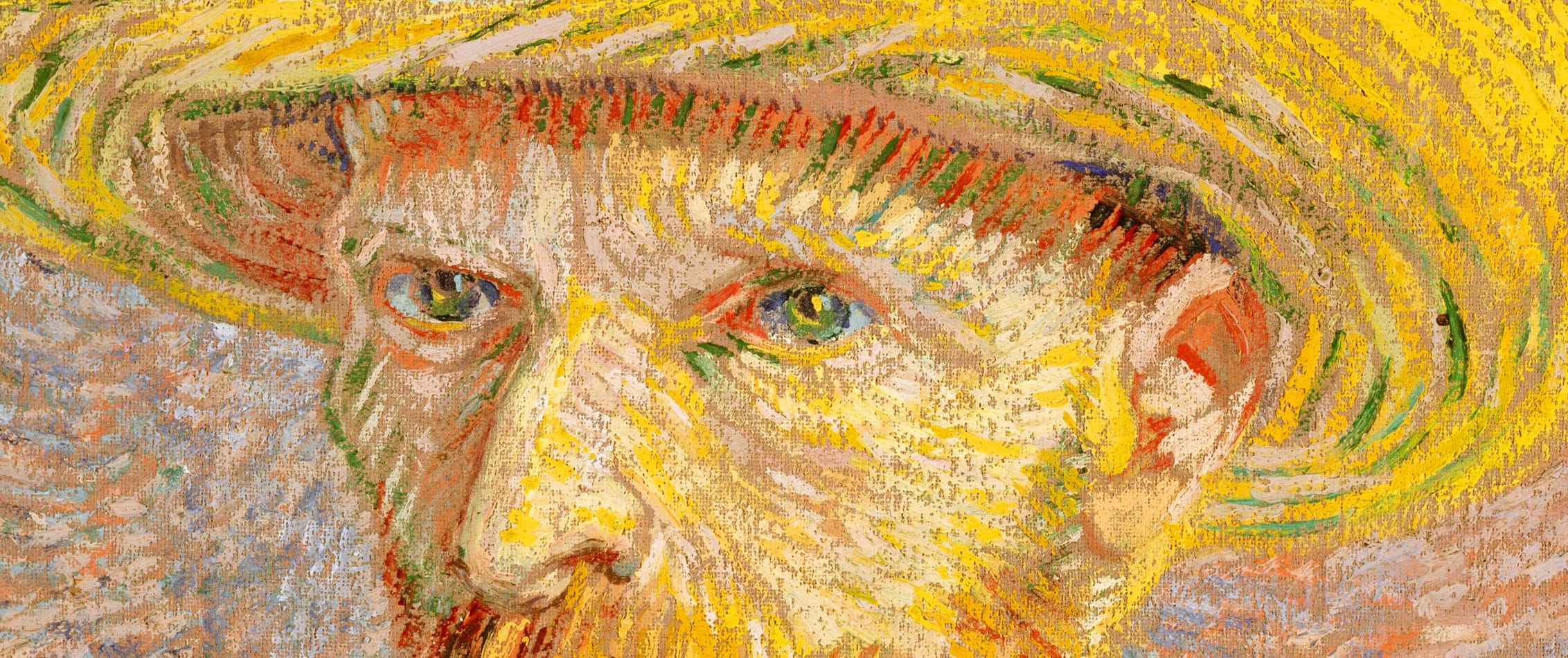
One of my favorite alternate history theories is that Van Gogh did not actually kill himself. At this time, I am fully convinced of this.
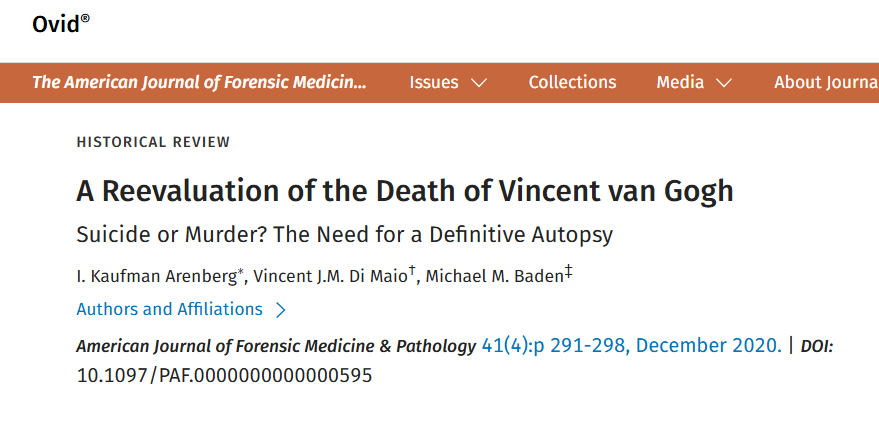
Although this is (to my knowledge) generally unknown to the public, it’s not “totally crazy” in academic art circles, and several serious people have written about it or explored the idea. Outside art history, there’s even purely medical articles about it:
The general (simplified) narrative is that there were some kids that were well known for hassling people in the town where Van Gogh lived and worked at the time. It’s posited that these kids had a pistol, and they were mock threatening Van Gogh. This pistol theoretically accidentally went off while they were pointing it at Van Gogh, and out of a desire to protect them, he just said he shot himself.
To briefly run through the most compelling parts:
A) Abdominal wounds are extremely rare in handgun suicides.
B) A leading gunshot pathologist named Dr. Vincent Di Maio (involved in high-profile historical cases like Lee Harvey Oswald) looked over the evidence and was very skeptical of the normal Van Gogh suicide narrative. Just one striking detail:
“It would be extremely difficult to shoot oneself in this location [i.e., on the left side] with the left hand. The easiest way would involve putting one’s fingers around the back of the grip and using the thumb to fire the gun. One might grasp the gun with the right hand to steady it… Using one’s right hand is even more absurd.”
Van Gogh was right-handed. Di Maio also noticed the lack of powder burns that would have been present (source).
C) The easel, paints, canvas - everything he would have brought into the field with him that day - none of it was ever found. This is hard to square with him shooting himself in the stomach, dropping the gun, and dragging himself back home (around a mile away).
D) No suicide note.
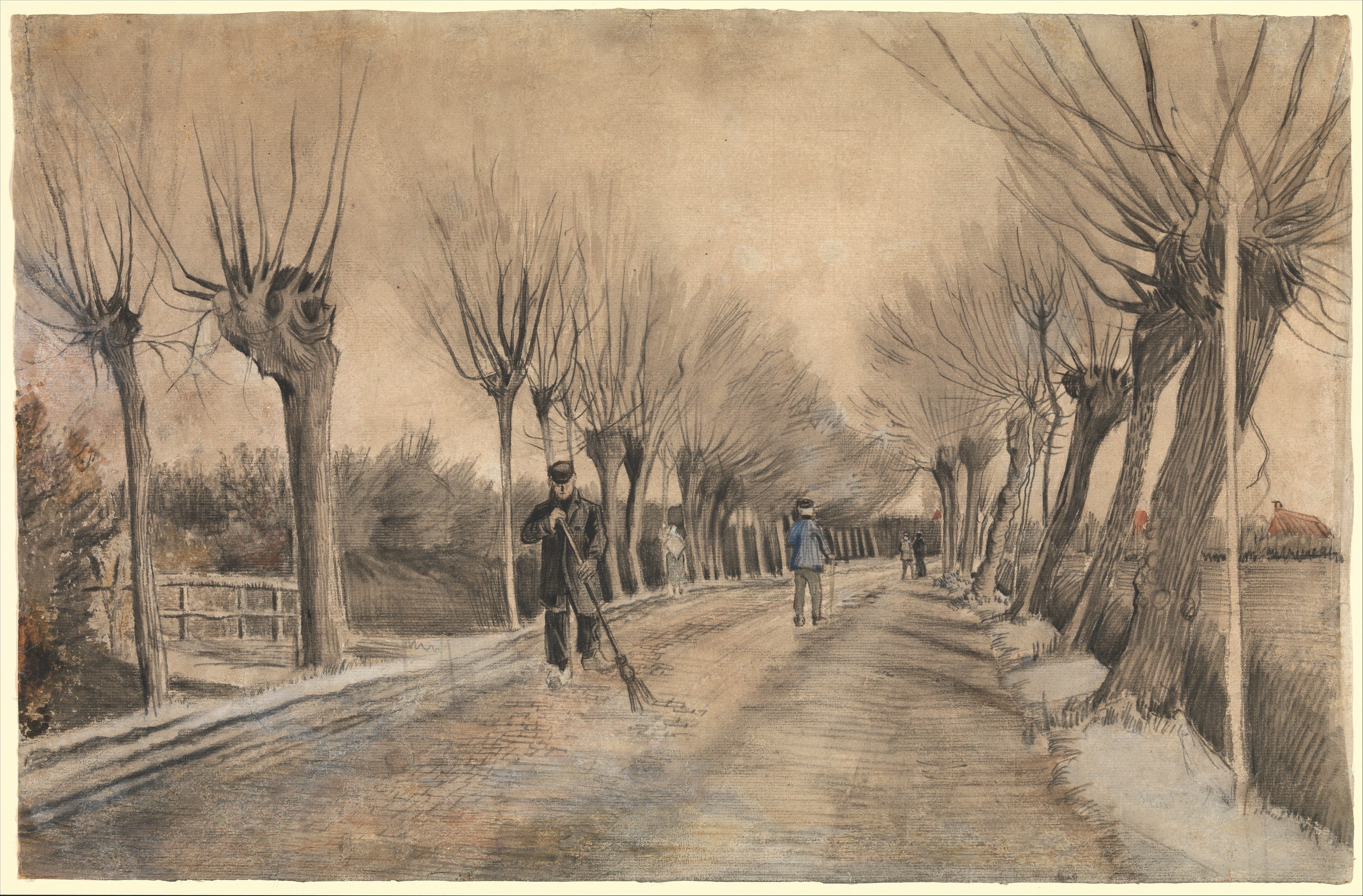
There’s a lot more - what he said about it, initial reports, and so on - you should research such things yourself before taking it from some random guy online (me, hello), but what tipped me over the edge for this was that he had his easel and paints out in the field that day: the day he supposedly shot himself. So, the “official story” asks us to believe that he woke up, loaded up his paints and easel, brought them out to the field, where he painted for a while (painted what? Apparently nothing of any significance to him), then shot himself in the stomach, then packed up all his stuff, and dragged himself all the way back to town.
This is obviously completely nonsensical. The alternate explanation is far more plausible. It’s hard to imagine a painter packing up his stuff, painting for a while, then shooting himself in an extremely painful but only potentially deadly place a single time, then going back to town to quietly slowly die.
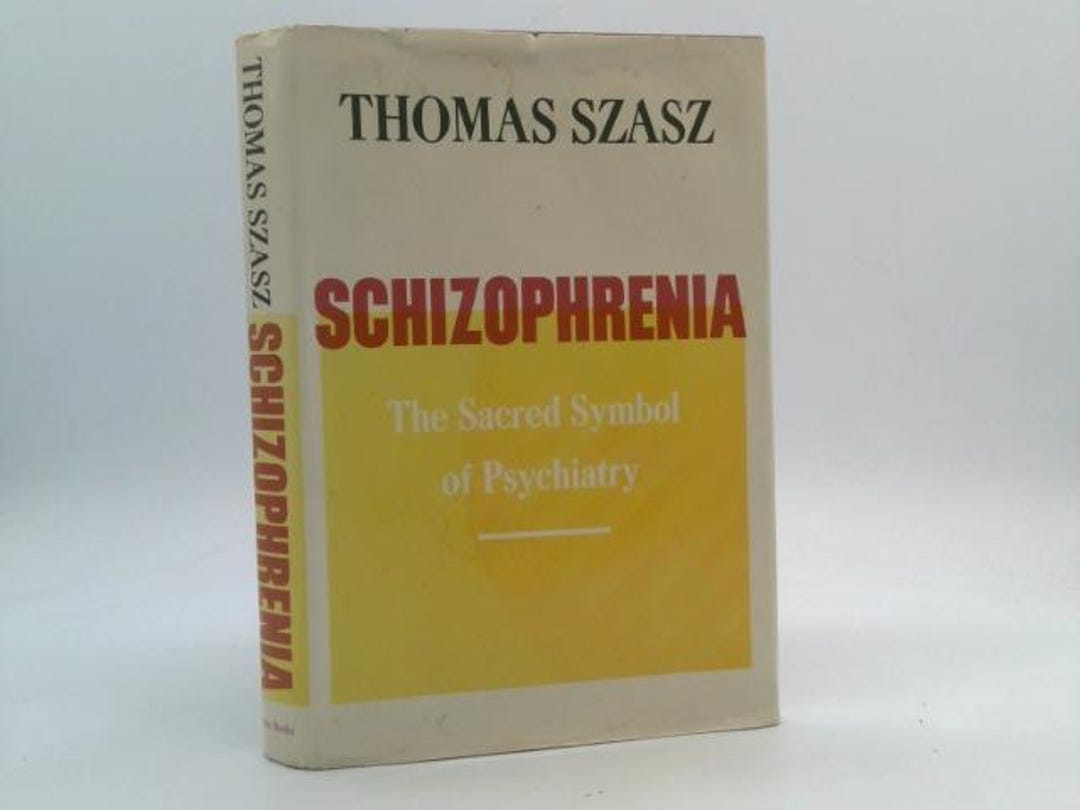
A psychiatrist named Thomas Szasz has a book called “Schizophrenia: The Sacred Symbol of Psychiatry”. I think this is a fantastic title, and I think it ports over well to modern art history. “The mad artist” who society rejects, who dies undiscovered because the people around him just don’t get it, and is so ahead of his time that only later is his brilliance revealed to the world is a type of “sacred symbol” for modern art history, and the idea of modern art in general.
Van Gogh is really the ultimate example of this. Everyone learns he cut his ear off, everyone knows ‘Starry Night’, every artist knows the tales of him toiling away without selling anything, and now he’s a contender for most famous artist of all time.
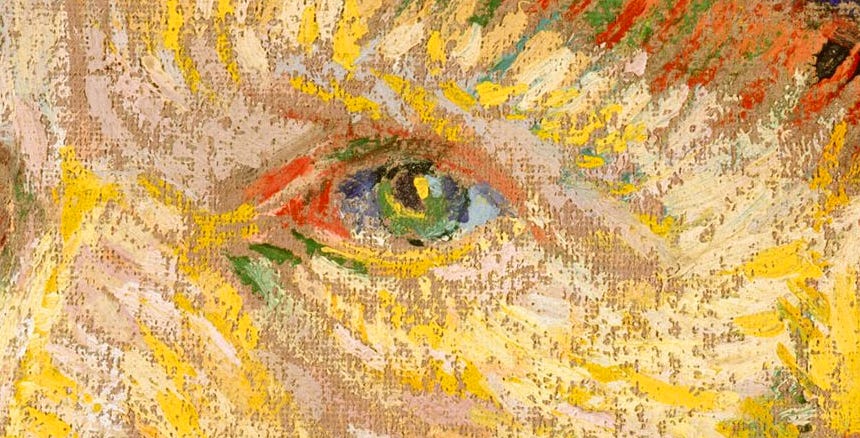
What would it potentially mean if his self-inflicted death was not real? I wouldn’t suggest anyone had any nefarious motives in establishing this tale - in fact, the alternative narrative suggests the opposite: he himself put forth this lie in order to protect some local kids.
Either way, it’s a clear keystone for the modern conception of art - and therefore, in a way, for part of the modern world in general. I was genuinely surprised when I was thoroughly convinced that this self-inflicted death never happened.
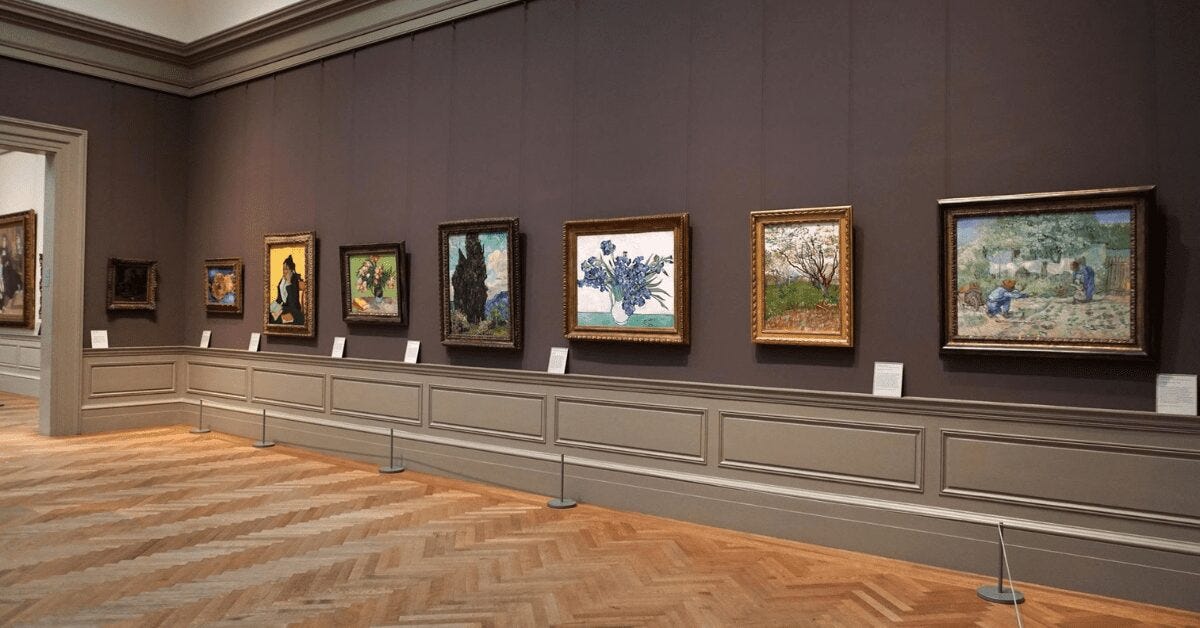
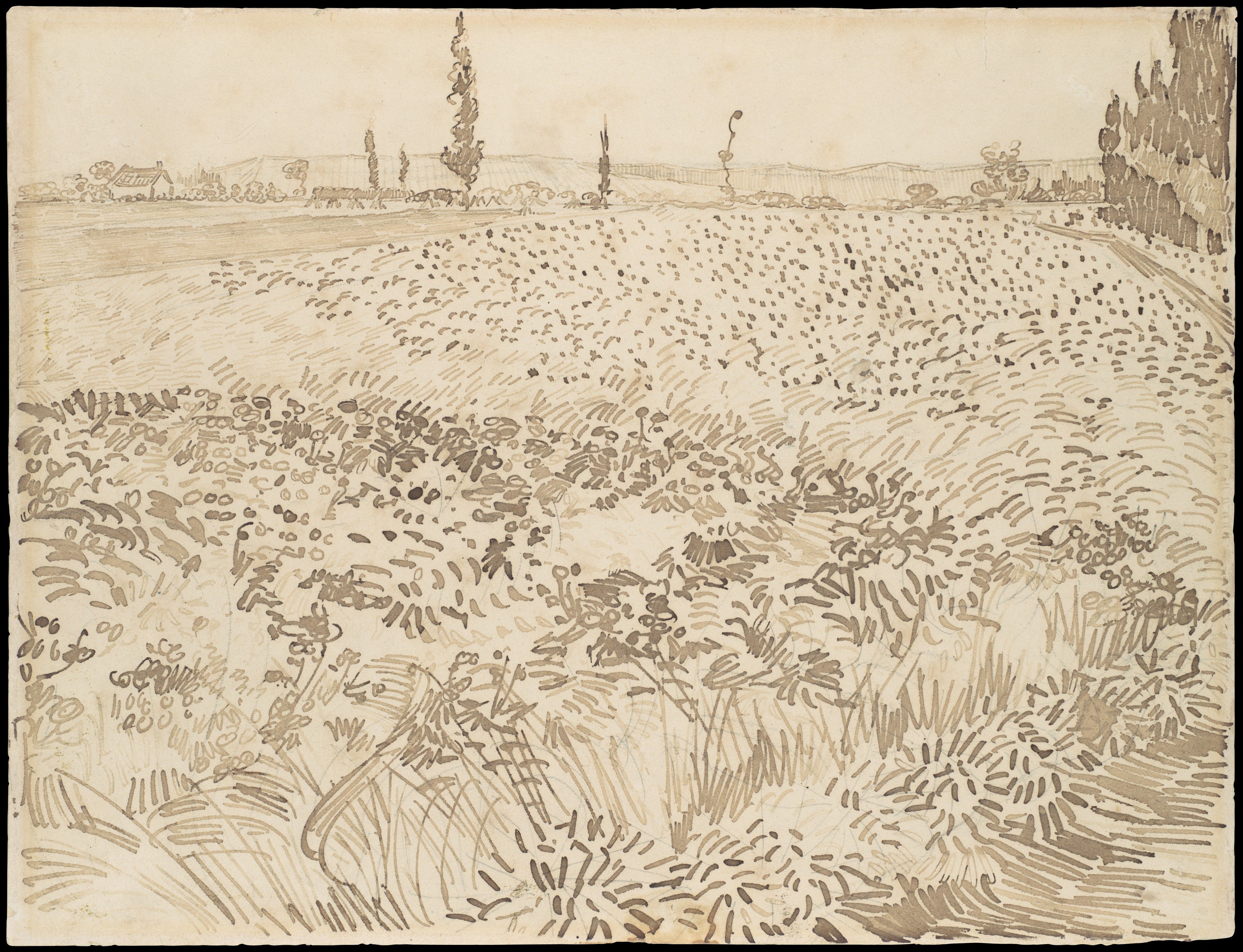
On a related note, I used to go almost every day to the Metropolitan Museum of Art, where I would look at the impressionist and early modern works. The image below is a Van Gogh painting called ‘Wheat Field with Cypresses’. It’s always on display.
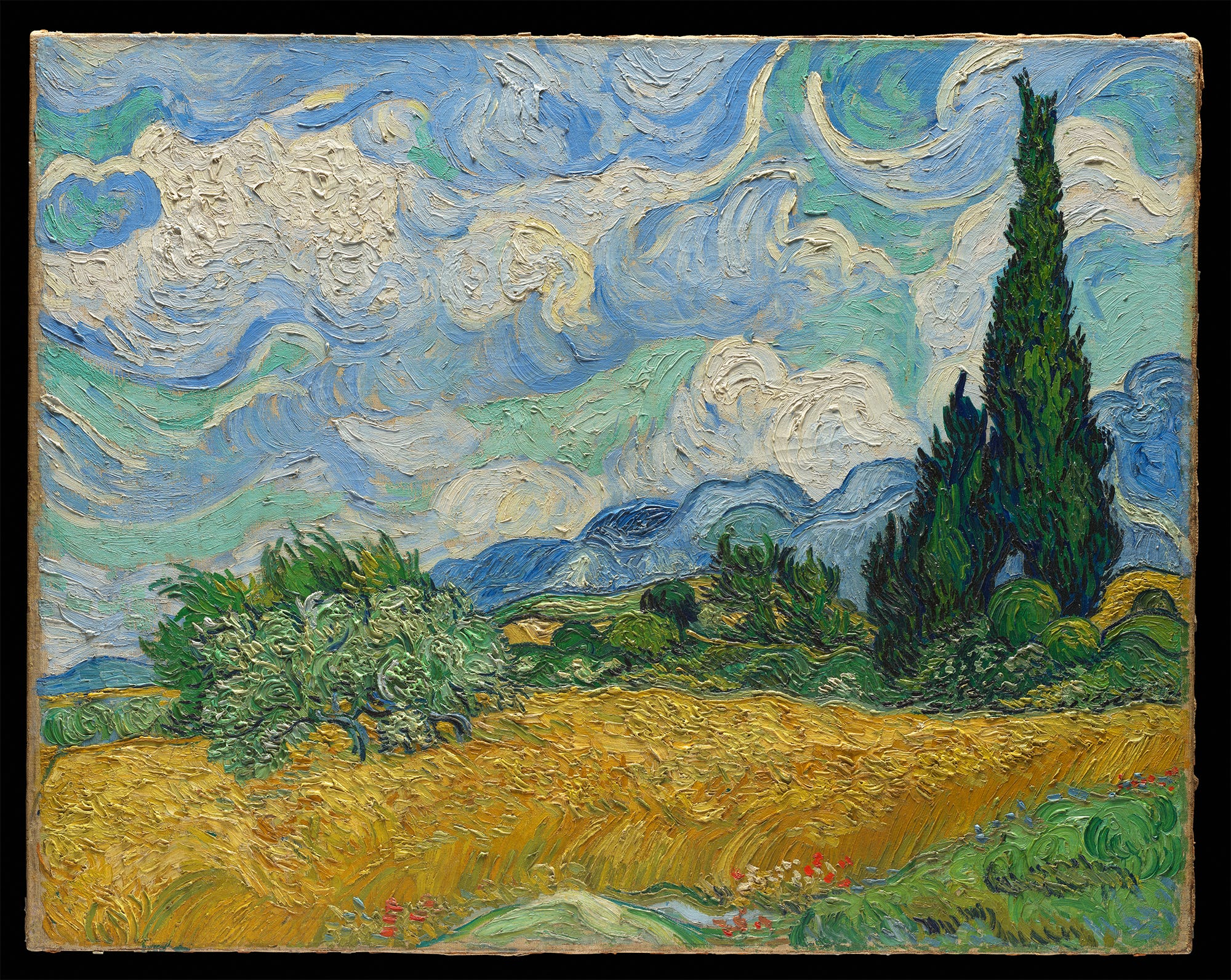
There’s an investigative journalist who says this is fake - really, misattributed: that another artist painted it, and it’s been passed off as a Van Gogh. I found this less convincing (it’s just harder to prove such a thing) - but, one thing he mentions is the dark spot in the center of the image. Aside from “actual evidence”, he says Van Gogh would never put a dark eye-catching patch dead center in an image like this.
I could never unsee this, it’s all I thought about every time I saw this painting after hearing it. I would find myself standing there, alone, staring at this dark blue ellipse. I could no longer see the painting outside of this story.
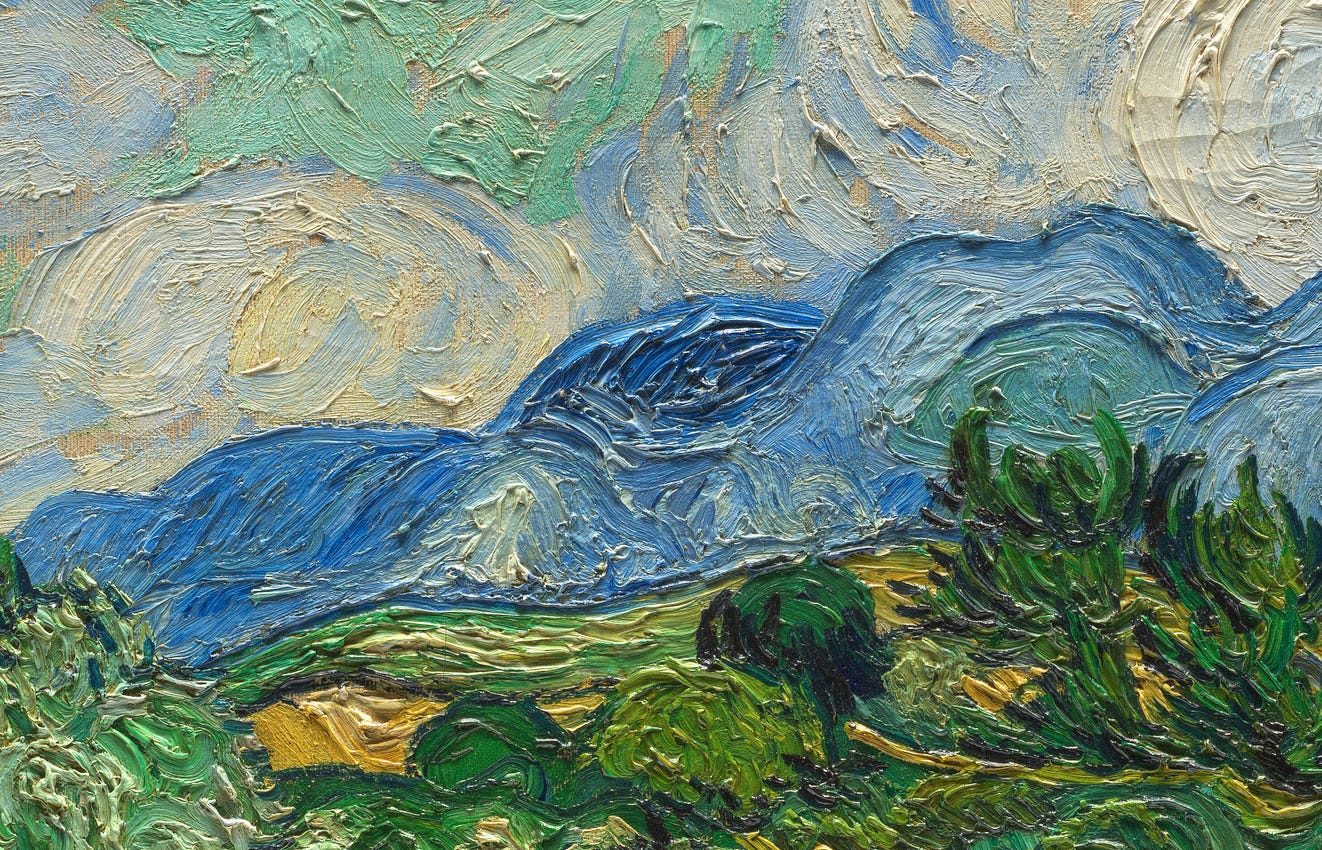
A former director of that same museum, Thomas Hoving, once said that about 40% of the incoming works of art in all fields he examined were basically forgeries - meaning, they weren’t true. It’s hard to know if the stories we associate with the art would rank higher or lower for how many are real.
Either way, these stories become inseparable from the art, even if you don’t believe them.
Speaking of art: I do it. You can see my most recent large piece here, or everything I do here.
The plot of "Loving Vincent" is based around the accidental shooting theory. Beautiful film. Animated in the style of his paintings: https://youtu.be/CGzKnyhYDQI?si=xS9ZTAMKqQRpPAfp
The biopic with Willem Dafoe presents a theory like this as well.
Very convincing. Great research in this article!