
America And The Radical Reformation
On what we call "Protestant"

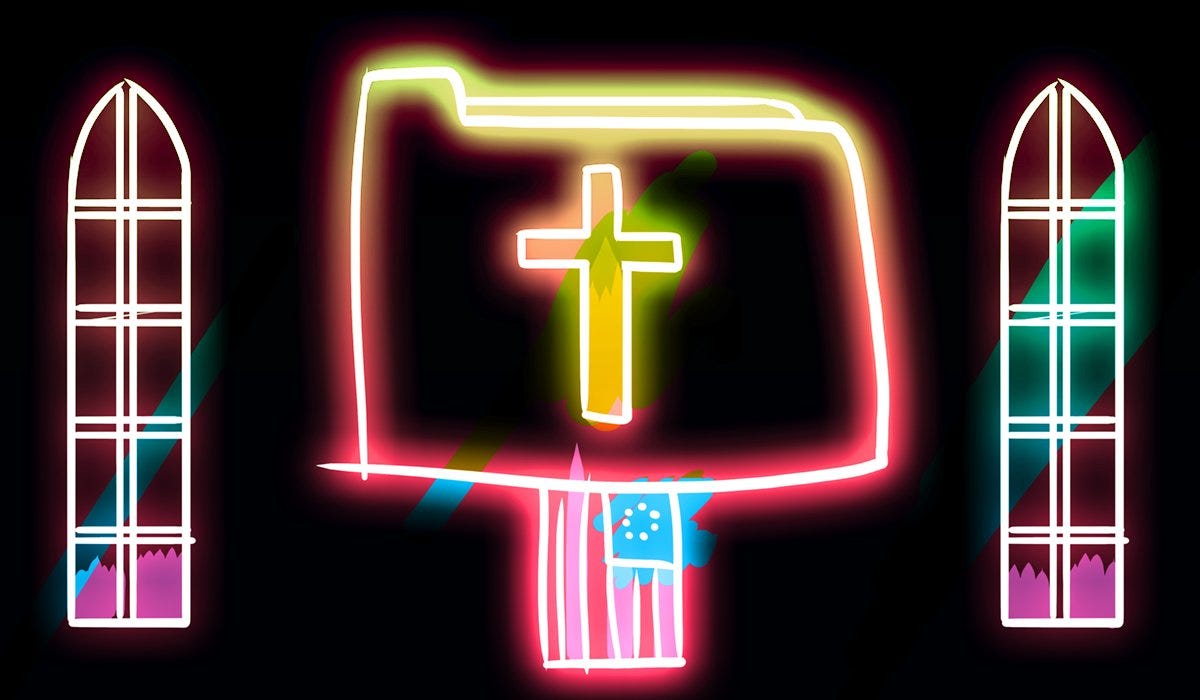
At a certain point, I stopped thinking of “Protestant” as one folder, and split it into two completely separate categories. I thought this would be a kind of historical curiosity, but it became central to my worldview. In a way, it became my “whole thing”.
This is an extremely complex topic, but it’s one very close to my heart. In fact, I would say opening up this knowledge and fully accessing it changed my life - how I see myself, history as a whole, my country, people group: everything.
Some people already know about this. Personally, I had to read literally thousands of pages to understand it (maybe I’m dense), and now, I'll just tell you.
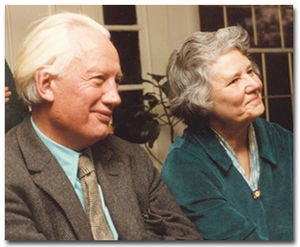
This is a guy named George Huntston Williams; he was a historian of Christianity who specialized in the history of non-Trinitarian Christianity. He was born in the early 1900s and died in 2000. His dad was a Unitarian minister, which I suspect partially led him into his field.
He wrote a book that's almost 1,000 pages called "The Radical Reformation". In fact, he coined the term "the Radical Reformation" (allegedly), which is interesting given that this was published in the 1960s. In the grand scale of history, this just happened:
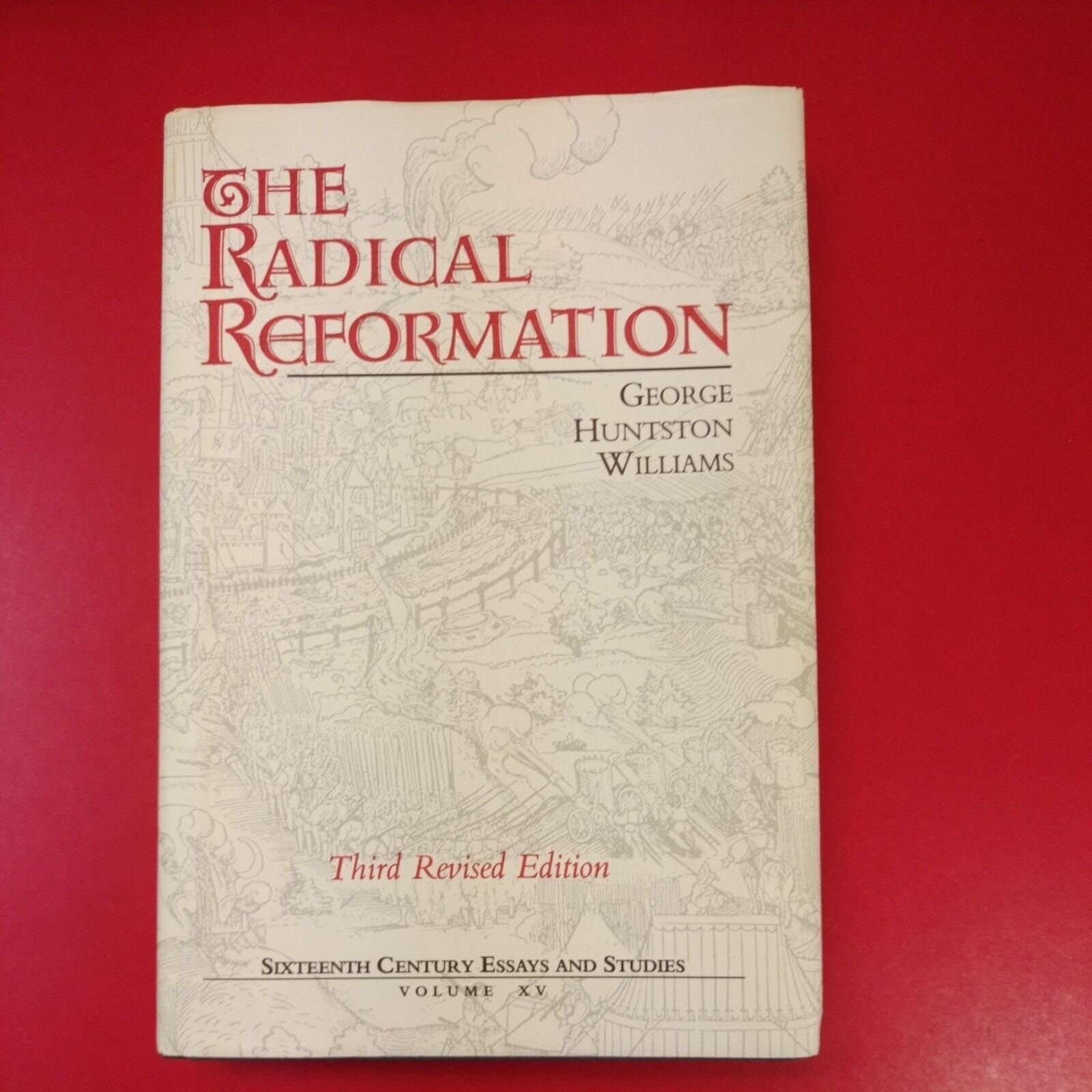
The book covers the 1500s and goes through almost every European country from Spain to Scandinavia, out into the east: Poland, Transylvania, places like Moravia, Silesia - then back into Italy. It largely focuses on Anabaptists, but I would say the book has one sub-textual central thesis.
That thesis being: the distinction between the magisterial Protestant Reformation and the Radical Reformation. To simplify, when we think of the Protestant Reformation, most people think of Martin Luther, Calvin, all those guys, versus the Catholic Church.
However, in reality, there was a third group that they both disliked. If we imagine Europe as a small video game, basically Martin Luther and Calvin broke away and locked down a bunch of territory pretty quickly. Meanwhile, there were other groups who they disagreed with - a lot. Martin Luther and Calvin were fine using state power to enforce their views in territory we might casually say they "secured".
So if you disagreed with them, who were you? You were a third group of sectarians, meaning a coalition of the fringes. You were just part of a third folder, and lots of people in this folder had nothing to do with each other, except this odd position they were now in - as a third party attempting to flourish in and outside the blast radius of the Protestant reformation.
So, what did these groups believe in? Well, lots of stuff: there isn't one thing they all had.
We’ll look at a short list just going off the top of my head. Some had a few of these, some had only one or two. These are some things that made these groups different from the “main players”, some major and common, some really fringe and weird: (just to be clear, no one group had all these… to my knowledge).
Not doing infant baptism (i.e., believers' baptism).
Not using state power to enforce their beliefs.
Pacifism.
Sabbatarianism (i.e., hardcore doing the Sabbath, sometimes on Saturday).
Sometimes, not being Trinitarian.
Or, atypical beliefs about Jesus (atypical Christology).
Sacramentarianism (i.e., an atypical relationship to the sacraments, maybe they're just a metaphor or symbolic or inward or unnecessary, etc.).
Nonadorantism (not praying to Jesus).
Extreme skepticism of priests.
Getting new revelation themselves.
Keeping property in common or hyper communal stuff.
Mega apocalypticism.
Unitarianism.
Universalism (no hell).
Could just keep going on here, but let's keep going.
There are two points: A) The descendants of these groups, which range from full on direct lineage, i.e., "yeah, that's my grandfather" to "retaining a slight purely historical or coincidental influence that's hard to spot," get lumped in with the magisterial Protestant reformers.
But, really, if you think about it, (don't get mad) the "normal" Protestant reformers are almost closer to the Catholics than they are to these groups.
Think about what "old school" Lutherans think about the sacraments and classical stuff like that: they're really, really, really far away from groups who reject all that - despite both being seen as “protestant”.
So, you often see people bring out quotes from Luther or Calvin on things like classical doctrines (the Eucharist, perpetual virginity of Mary, etc.), and they present it as an "own," like, "tee hee, American Protestants don't even believe anything like this."
Well, yeah, that's why; they're not really related in that way.
Not only are they not really related in that way, if you grab two Protestants in America, it's actually pretty easy to get someone whose ideological ancestors spent most of their time trying to not get killed by the heirs of Luther and Calvin: they weren't palling around with them.
Imagine a room: you have an American Evangelical, an Amish guy, a Lutheran guy, and a Catholic guy. Even though the main conflict of the protestant reformation is seen as people like Luther vs. the Catholic church, in that setting, if we grouped them by closeness of ideas, the Lutheran guy and the Catholic would bunch together on many, many, many topics - probably more than with the Evangelical or Amish guy, despite them supposedly being in the same folder called “protestant”.
In my view, that’s because of the radical reformation. The Amish guy and the Evangelical are more downstream of the radical reformation, whether because of history, or just shared inclinations. They’re not really downstream of Luther - except as someone who opened the pressure release valve and allowed a chance to make their ideas known.
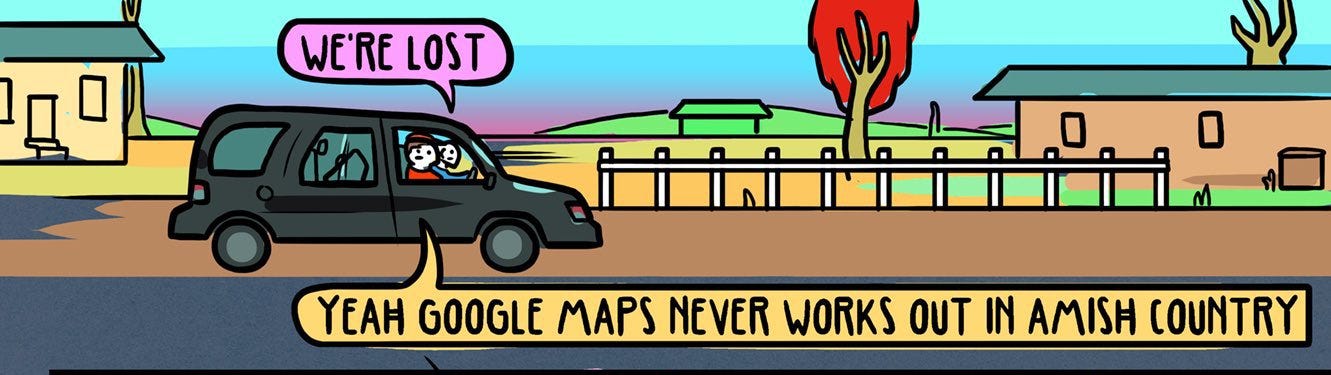
Point the second. Well, let's look at another comic. I like the dog in this one:
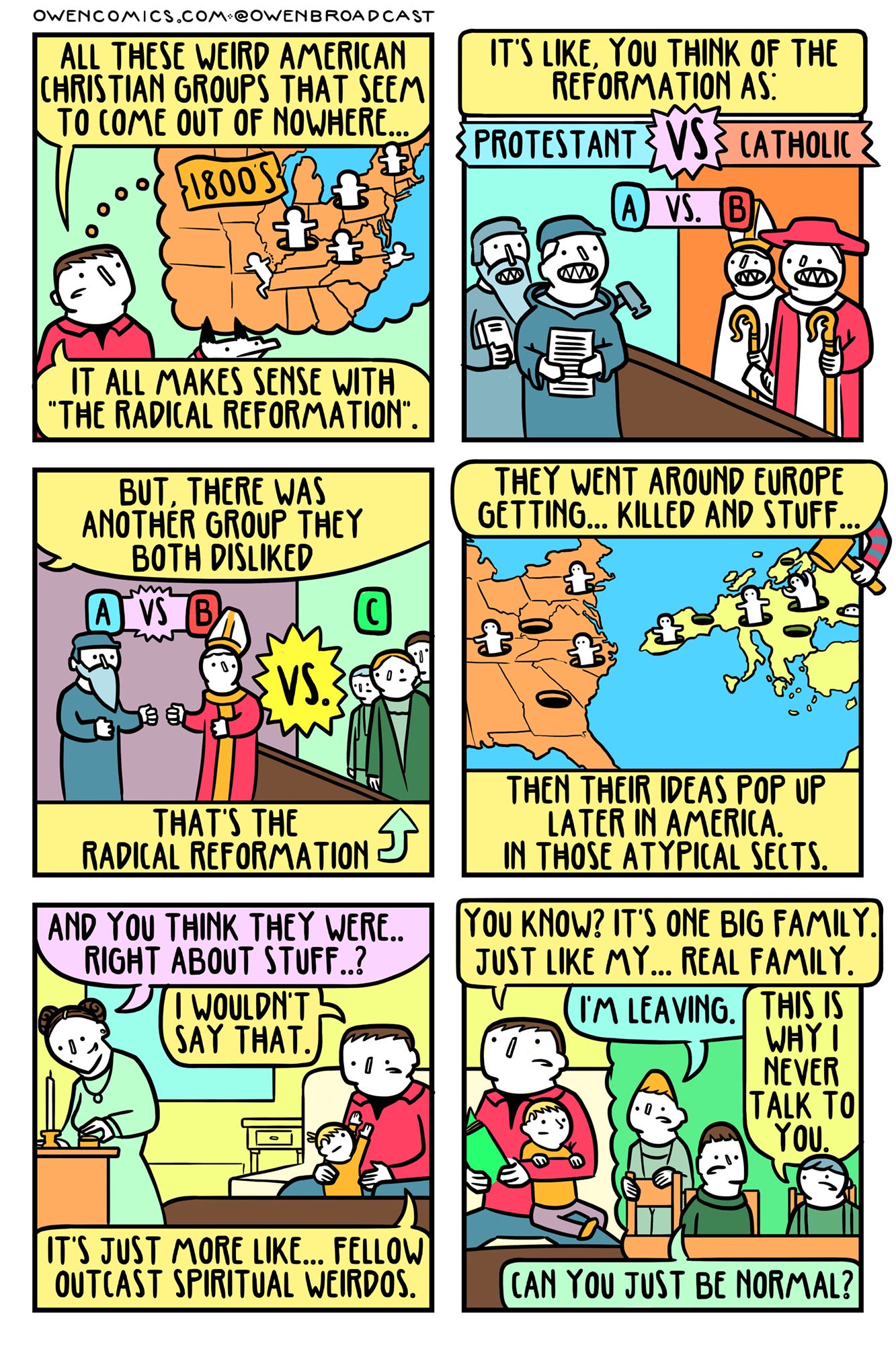
I went on a long quest to understand American Christianity. I suppose understanding such a large phenomenon in full is basically impossible, but this was a huge piece of the puzzle. If I was going to come out of the gate with an explosive attention-grabbing statement, it would be:
It kind of seems like America isn't a Protestant country.
America is a Radical Reformation country.
Everything just makes sense after realizing this.
At the most zoomed-out level, America doesn't believe (ostensibly on paper) in using state power to coerce religious beliefs, and when you go through our history, every single page, there's just weirdos: just atypical weird people.
Think about all the weird religious groups (hey I love you guys what's up) America has uniquely produced.
If you had to fit them somewhere, they all fit best in this third category, and have some of the concepts I mentioned above.
But then, work your way back from the fringes, towards the essence of America itself. It's all like this, almost all the way through. The other (frankly, more) normal groups are there, but an extremely significant percentage of our history is people that fit in this third category: more in line with the radical reformers and what would have been, in the time of the protestant reformation, fringe groups - not people that would have fit into the A vs B, Luther and Calvin vs. the Catholic church normal understanding of the protestant reformation.
People in Europe at the time were getting killed for not baptizing infants. Where I live now (rural red state), that’s standard.
What category do our largest "most American" (in a way) group, Evangelicals, really go into? From my perspective, people very into “proper” theology often have a slight (perhaps loving) disdain for some of their beliefs. What’s their issue with Evangelical tendencies?
They are generally less creedal (focused on historical creeds). They are generally less historical (less focused on their ideological ancestors and place on the timeline of Christian history). They are generally less confessional (again, less focused on point by point assenting to a list of specific historical creeds in order to “join”). Generally, they catch heat in the online theology sphere for not being more like “proper” historical Christian groups: not doing the sacrament, not having apostolic succession, not even having priests - not doing any of that stuff.
Well, doesn't that kind of just totally make sense in that framework? I’m not Evangelical, but - I like them. As a third party, I look at those conversations and say, “…yeah. Exactly. That’s… the whole thing.”
The Radical Reformers could only really put roots down hard on the edges of Christendom, where they weren't going to get burned at the stake or thrown into a river. There was one Unitarian king once, I heard. Where? Transylvania. They could only get and secure ground far from a state power that would kill them.
There's generally an English vibe of letting weird beliefs do their thing (one example, Swedenborg left Sweden (Lutheran) to go write and publish in England). So, some of these groups were able to get going in England - not without persecution of course, but, off the cuff: Quakers, Shakers, some “seventh day” sabbath oriented groups, and so on.
Well, there's one place that was really far out on the edges of Christendom when it started, and it had English roots:
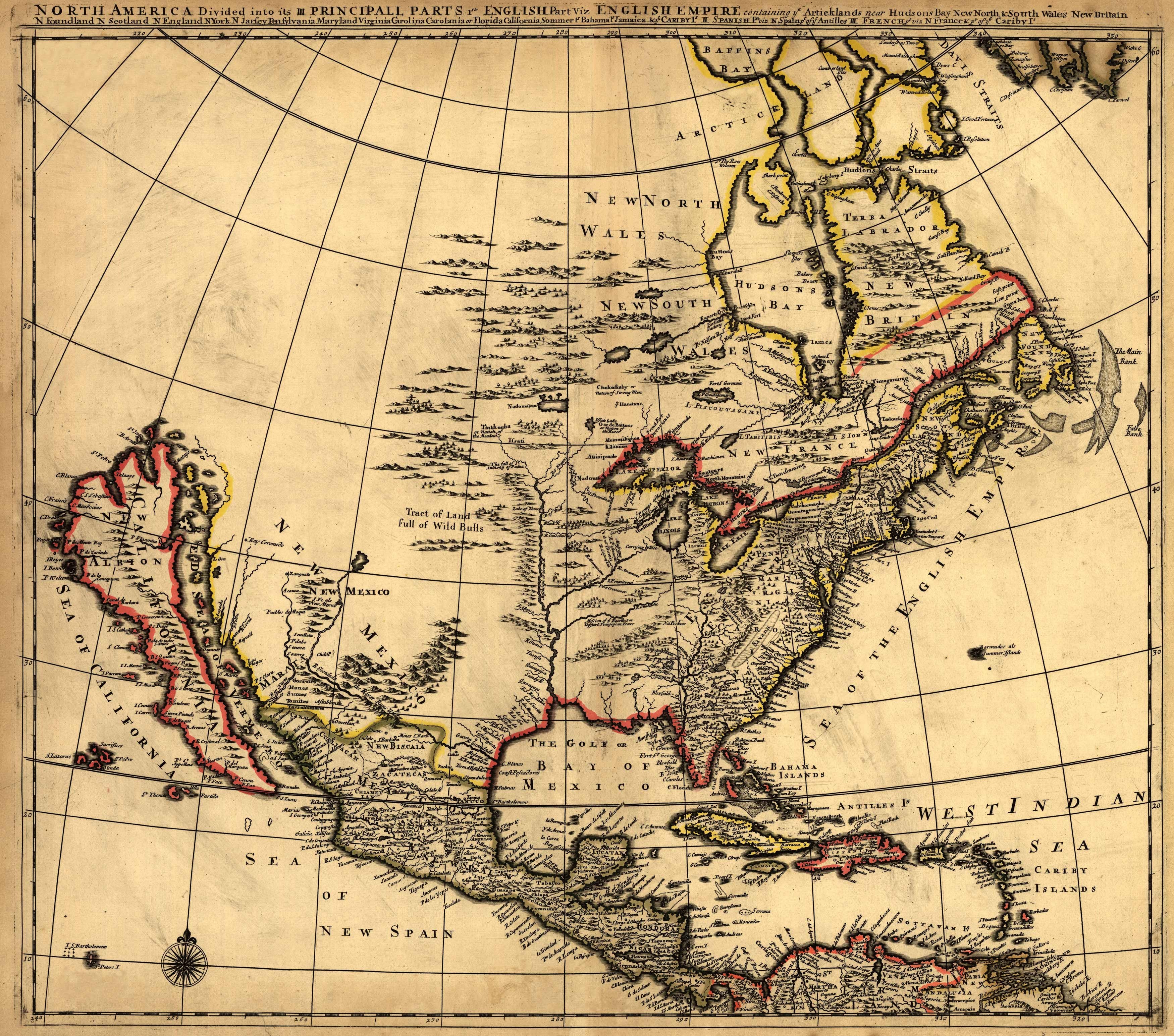
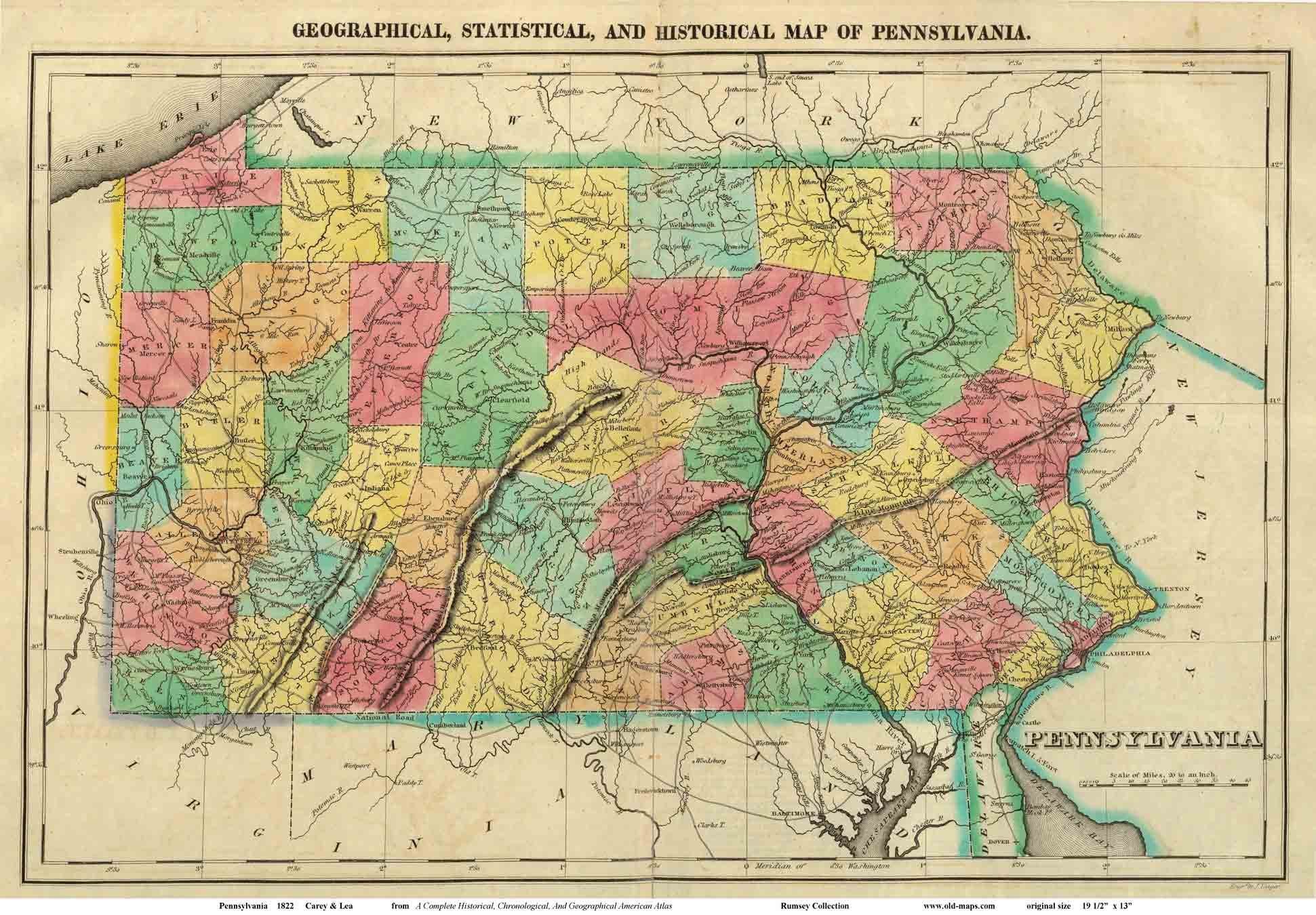
Who founded Pennsylvania? Quakers. Are they closer to the Radical Reformers or to Luther? You know what else you see in Pennsylvania? Amish people. They're… really Anabaptist (#1 getting killed by everyone in Europe award), aren't they? That's just one random example. This concept of a “third folder” cuts all the way through and colors everything.
I drive around my town. I pass a "Church of Christ". Who are they closer to, Luther or the Radical Reformers?
Pentecostal church, same question.
Non-denominational church, same question.
Mormon church, same question.
Baptist church down the street (that's an interesting one - depends).
Seventh Day Adventist church near my house, same question.
Evangelical megachurch, same question.
Here's a weird complex one: go through a list of the Founding Fathers - not going to get one clear answer, but, same question.
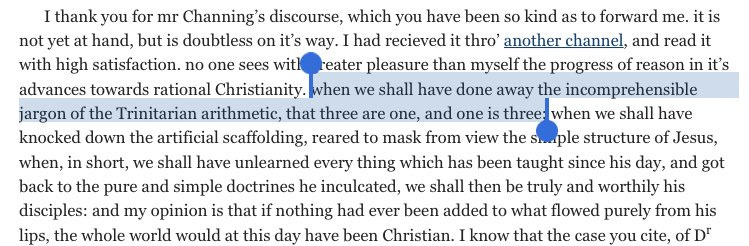
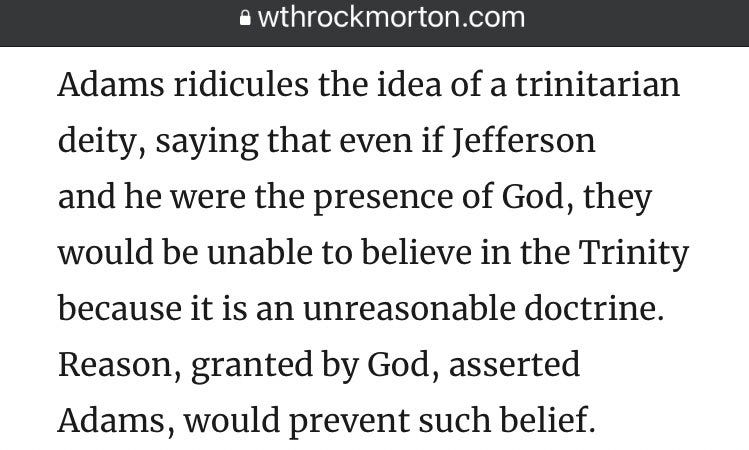
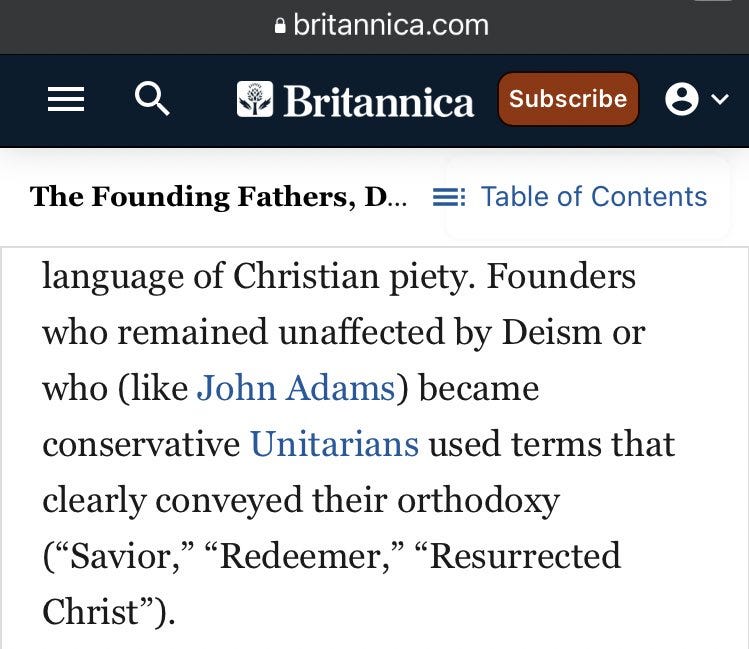
Thoughts for the mind.
Thanks for reading.

(The above comic is from one of my books, ‘Babyology’, which is partially about all this. If you’re unfamiliar with me, I’m also not antithetical to classical theology - you can see evidence of that here and here.)
Well, this explains why Europeans find American religion so strange.
I’m Catholic but I quite like looking at American religions they are so dynamic.
I had heard that Catholics first proposed freedom of religion in America after a bad incident in Maryland where Puritans kept immigrating, took over the government then outlawed all religions but Puritanism. At some point the Catholics were able to take back the government and reached a compromise with freedom of religion. I keep looking for a better history about this colonial time, but haven’t yet. This was all before the revolution.
Kind of why I feel religiously homeless, as I believe in monarchy and blasphemy laws but also the means of grace. I'm also fairly racist (in the moral way) like Luther was (wishing all to be saved but not pretending everyone is the same and born a blank slate, or pretending tribal warfare just ended and race just ceased to exist by some 1950's UNESCO report written by a guy who changed his last name for totally not suspicious reasons).
Maybe this would be a fun blend: https://en.wikipedia.org/wiki/Eastern_Lutheranism
As Lewis stated when discussing Catholic vs Protestant with Tolkien, the situation is grim, because Protestants tend to keep drifting out further in the desert, while Catholics keep piling up new doctrines many ppl's conscious can't hold to (smothered in the jungle): https://files.catbox.moe/gwbdns.png
And there's never going to be a way to fix this until Christ returns. No immanentizing the eschaton. We are all going to die down here, and that's good news because this isn't home.